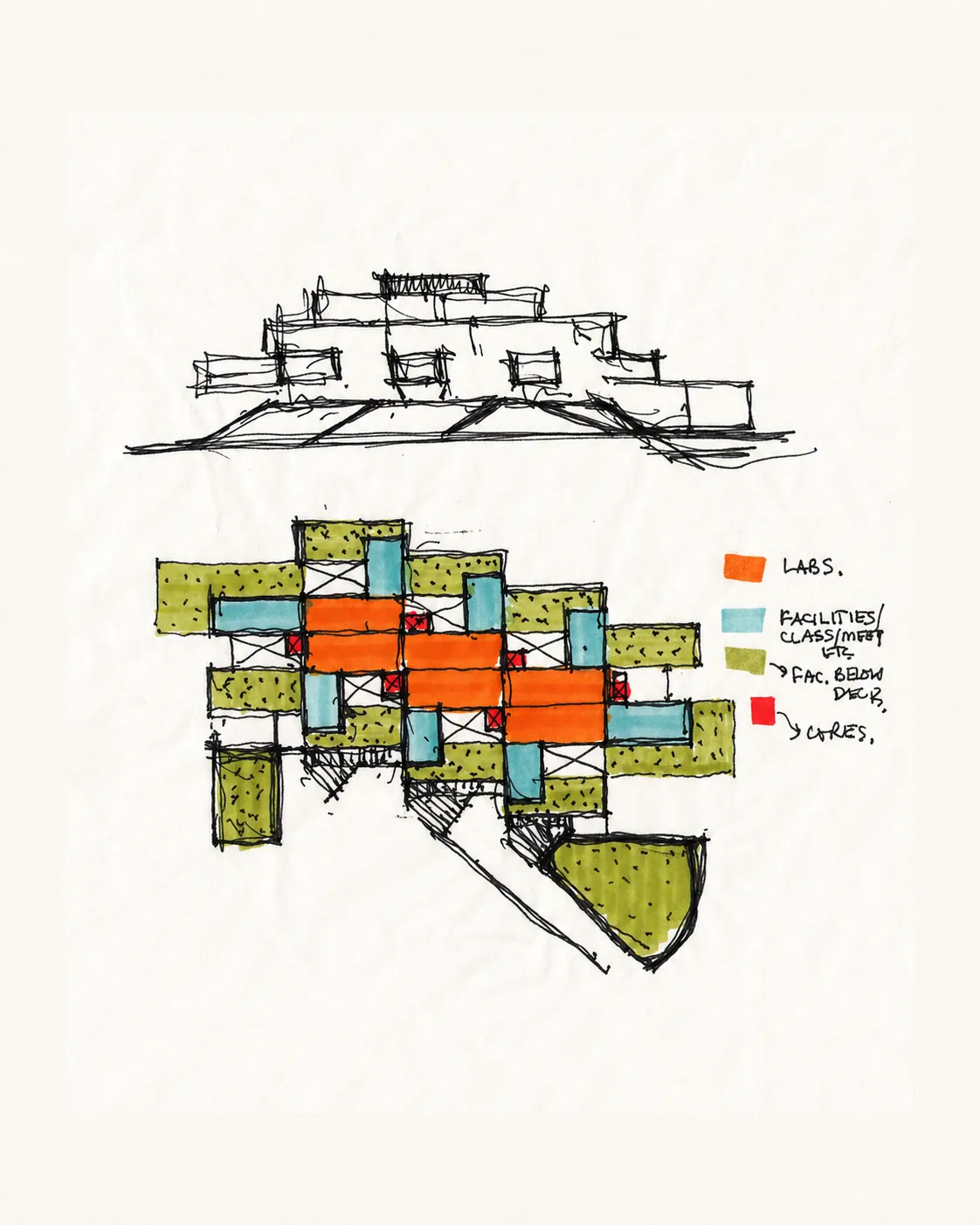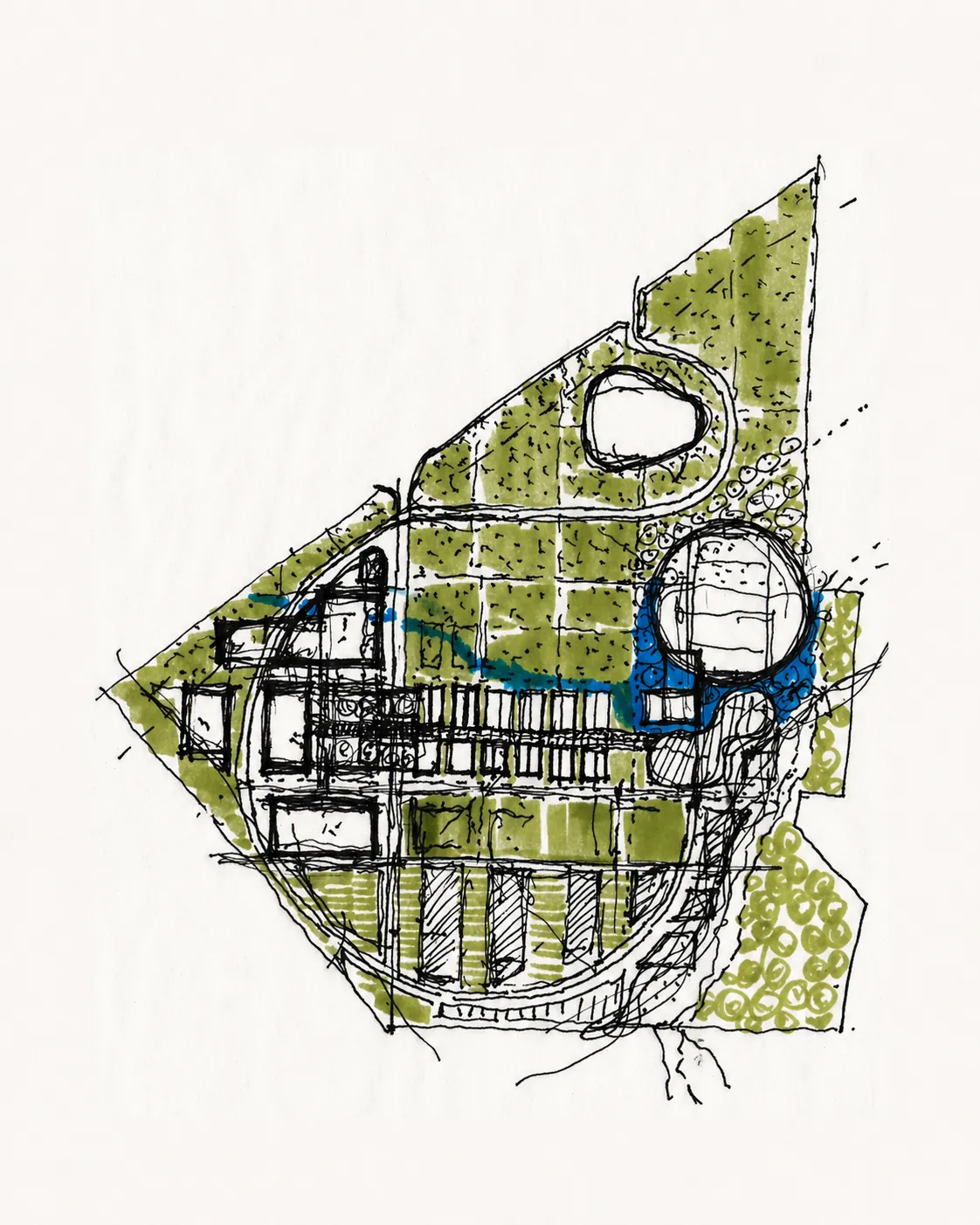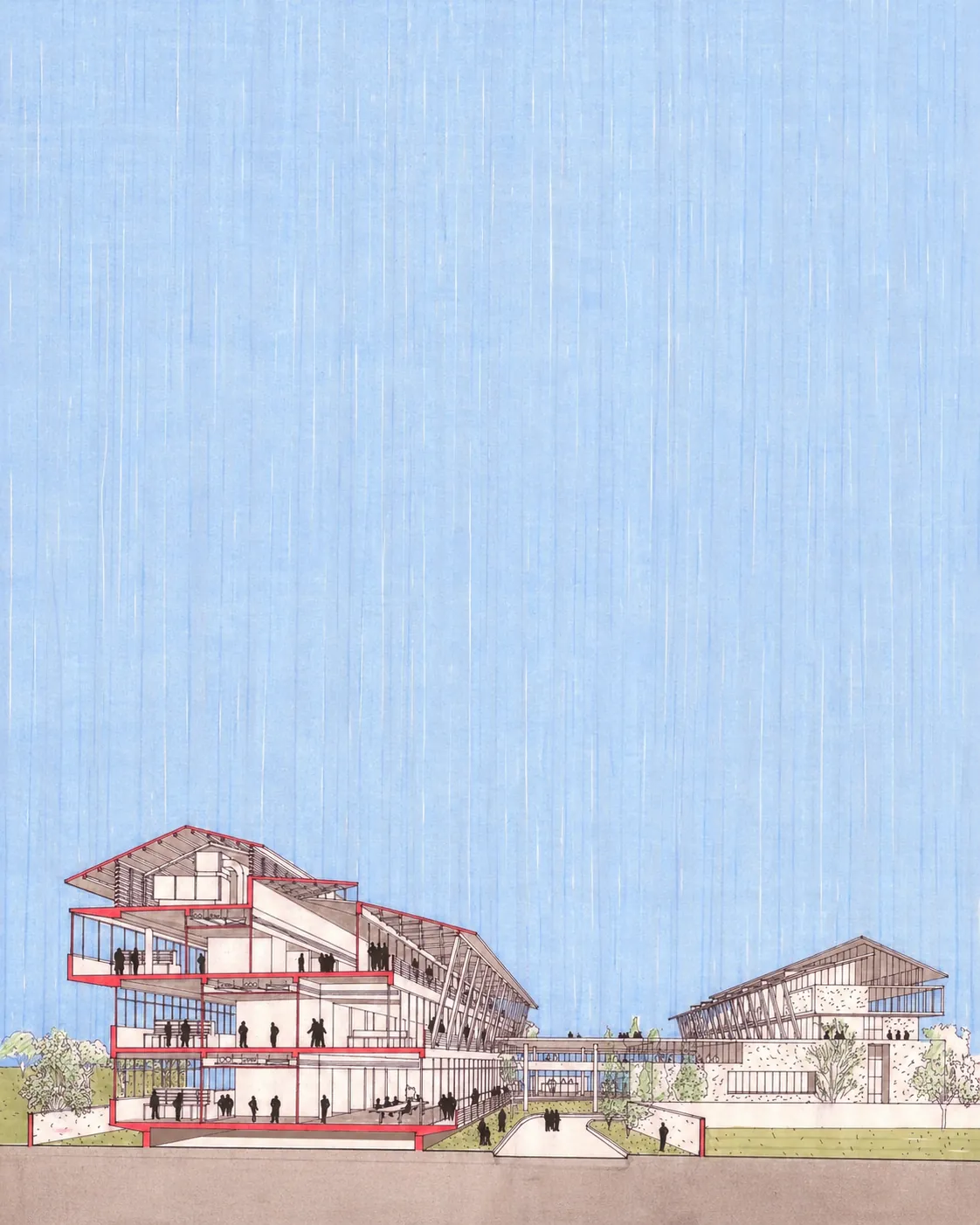
NCBS taught us how to think about research environments. What followed were years of exploration - many of them unbuilt.
NCBS was a foot in the door. It led to invitations from scientific institutions across the country. We were asked to design not just laboratory buildings, but entire research ecosystems - campuses like NABI Mohali, Instem Bengaluru, IBSD Manipur.
The scope demanded a shift in thinking. We were no longer designing isolated labs - we were imagining environments where scientists could live, work, play and think. Masterplans that brought together research buildings, student housing, staff quarters, dining spaces, sports facilities, and landscape into a cohesive whole. Each project began to root itself in its context.
For IBSD Manipur, we proposed laboratories with pitched roofs and wooden construction system - an architectural language that responded to climate and place.
For NABI-Mohali, the existing agricultural land divisions became our design principle. Working along with ecologists and landscape architects, we discovered something fundamental: water is the first principle of design - the connector that could organize the entire campus, ecologically and spatially.
We didn't build these projects. But they built something in us: a method.
Science doesn't happen only inside the laboratory. It happens in corridors, in the threshold between building and landscape, in informal gathering areas, in the systems - like water - that sustain both ecology and community.
The designs changed. The questions remained constant: What does this place want to be? What does science need to thrive here?