If you're commissioning a research facility, the lab layout decision you make now will shape what kind of science happens there for the next 20 years. It's not an aesthetic choice. It determines whether your researchers collaborate or compete. Whether breakthroughs happen or get buried.
We've designed both open and closed labs. Here's what we learned.
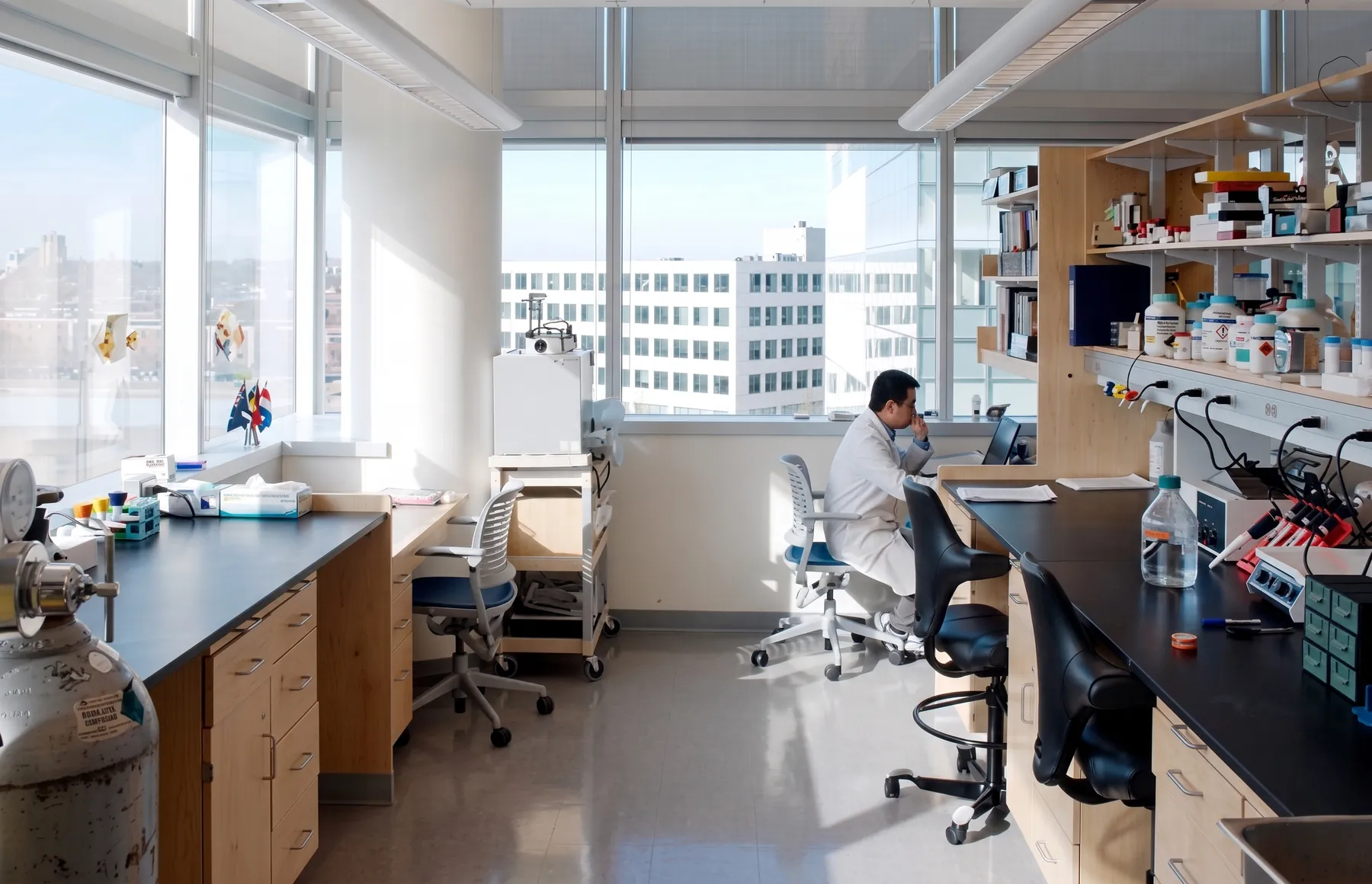
Look at the closed lab model: Each lab gets bounded space. Walls separate labs. Independent systems. Independent cultures. Researchers spend their days isolated from the broader institution.
It feels safe. It promises control. It's also where science stagnates.
Here's what happens: A researcher working on protein folding sits 50 meters from someone working on computational biology. No reason to talk. Lab systems separate. One group's breakthrough never reaches the other. They reinvent the wheel.
Research groups become territorial. The institution fragments into silos.
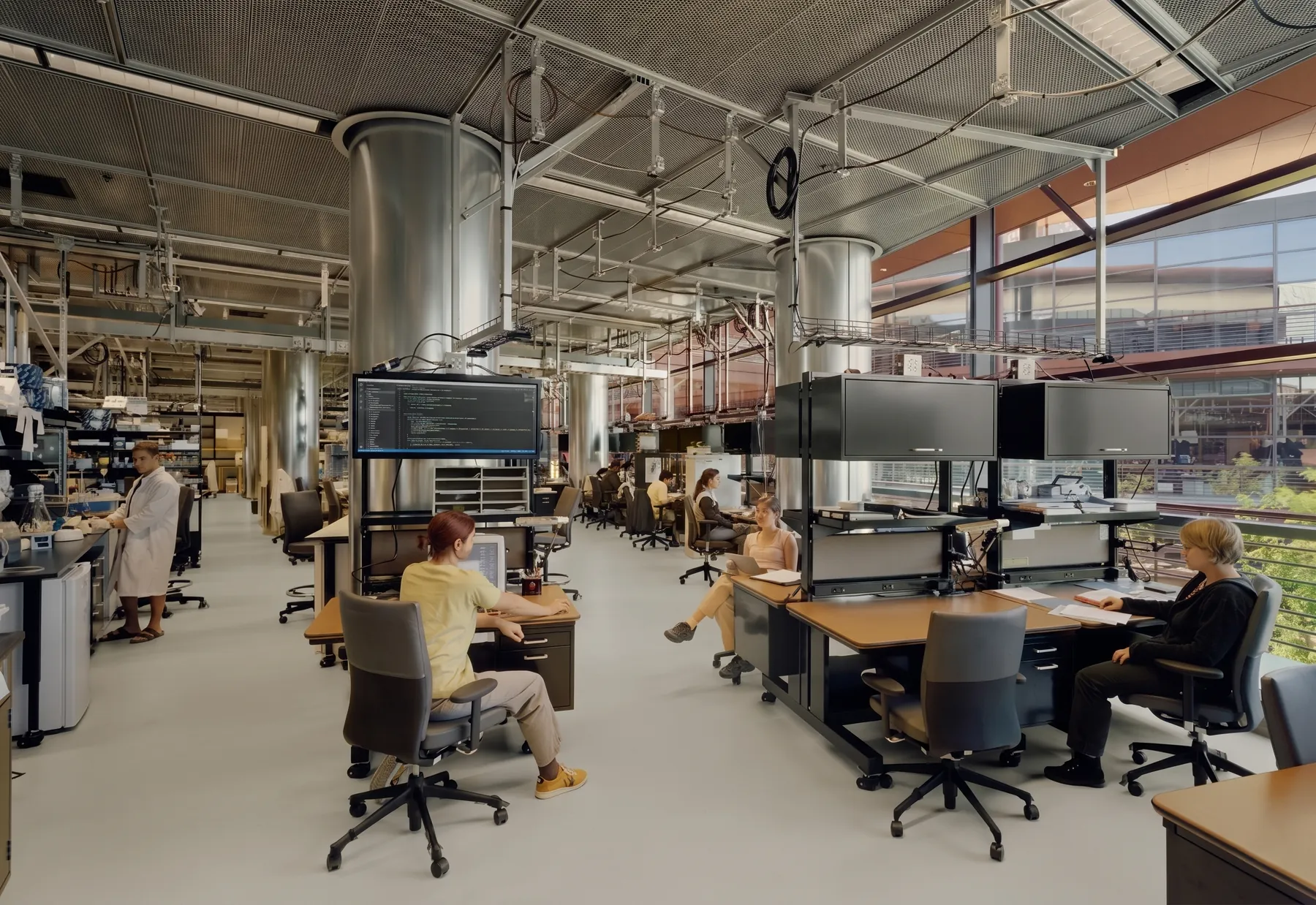
Now look at open labs - where researchers, benches, and equipment share unified space. No walls. Maximum visibility. Serendipitous collision is built in.
A biologist overhears a chemist struggling. They collaborate. A breakthrough emerges that neither could achieve alone. A senior researcher mentors across group boundaries. Knowledge spreads.
The lab becomes an ecosystem of shared science - not isolated fiefdoms.
THE DATA PROVES IT
Post-occupancy surveys from open labs show higher rates of cross-group collaboration, faster problem-solving through informal sharing, and stronger institutional community.
THE REAL COST OF CLOSED LABS
When you design a closed lab, you're assuming: "Research is individual. Scientists work in isolation. Competition drives excellence."
That assumption is wrong. Science advances through collision. Through unexpected conversations. Through one researcher's insight triggering another's breakthrough. Closed labs systematically eliminate that.
THE BETTER BRIEF
What if institutions asked instead: How do we design a community where scientists naturally collaborate? What space amplifies incidental interaction? How do we create both autonomy and connection?
Open lab models answer these.
Your next lab won't just house researchers. It will shape what kind of science they do. Make sure you're designing for breakthroughs, not for silos.